

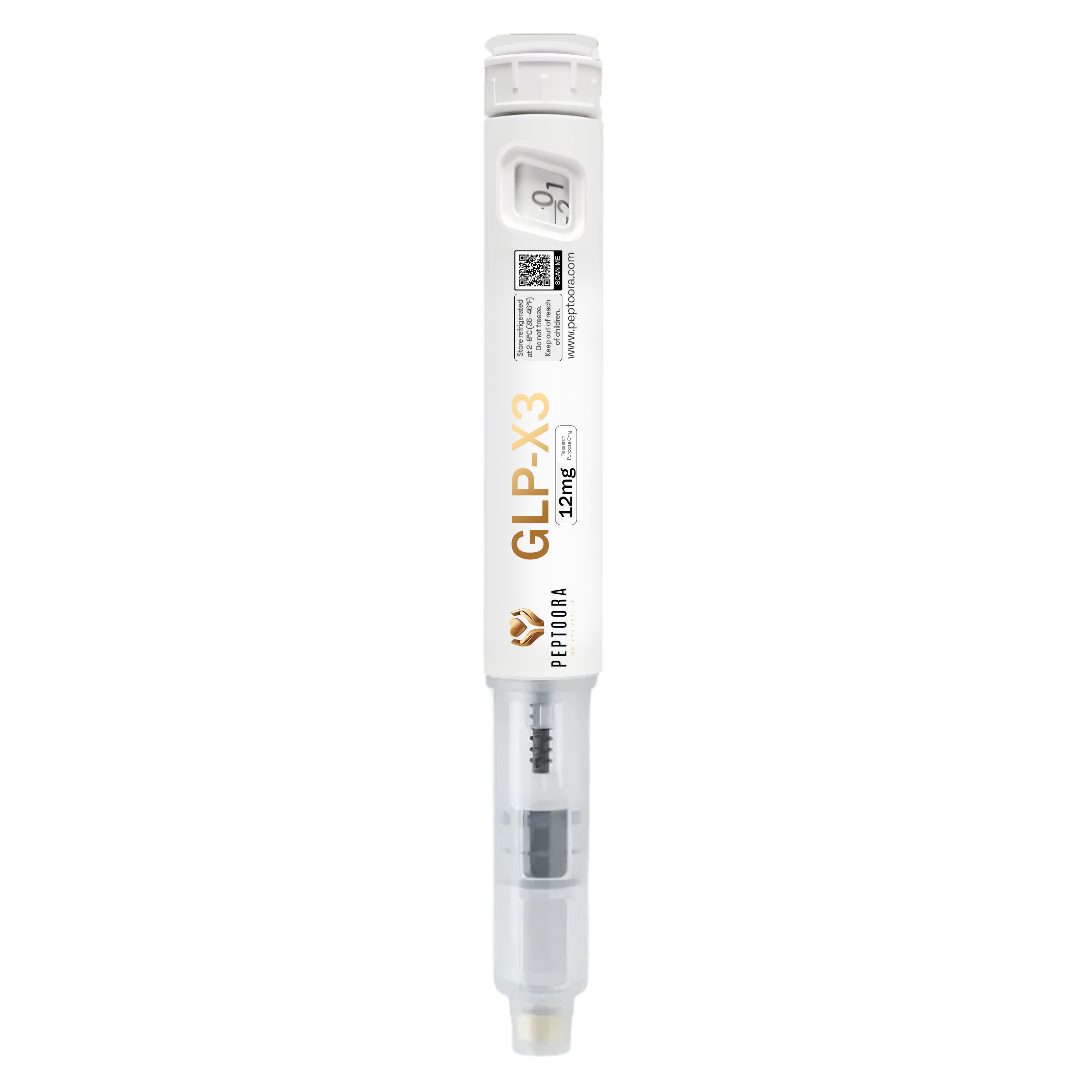
GLP-X3 30 mg pen
GLP-X3
GLP-X3 is a peptide positioned for controlled research settings where integrated metabolic regulation is being studied in relation to multi-receptor signaling across GLP-1, GIP, and glucagon pathways, with focus on appetite signaling, energy expenditure, and glucose homeostasis under defined metabolic conditions.
Supports
- Appetite signaling and satiety response dynamics (model-dependent)
- Multi-receptor metabolic pathway interaction (GLP-1 / GIP / glucagon)
- Energy expenditure and thermogenic signaling endpoints
- Glucose regulation and insulin sensitivity markers
- Body composition and nutrient partitioning metrics
- Exposure–response relationships in multi-pathway metabolic models
Description
GLP-X3 is a multi-pathway metabolic peptide associated with triple receptor signaling involving GLP-1, GIP, and glucagon pathways. These systems are central to the regulation of appetite, energy balance, and metabolic homeostasis.
In metabolic research, GLP-1 and GIP signaling are studied for their roles in satiety, insulin response, and nutrient handling, while glucagon-related pathways are associated with increased energy expenditure and lipid metabolism. The combined activation of these receptors enables investigation of coordinated metabolic responses rather than isolated pathway effects.
This compound is positioned for experimental designs focused on pathway interaction, dose–time relationships, and long-term metabolic adaptation across cellular and organism-level systems.
Clinical Status
GLP-X3 is primarily explored in preclinical and early-stage research contexts examining metabolic regulation, obesity-related pathways, and glucose homeostasis. Human outcome data are still emerging and remain dependent on study design and exposure parameters.
Evidence type:
Human RCT ▣ | Observational ▣ | Animal ✔ | In vitro ✔ | Regulatory approval ☐
Mechanism of Action
GLP-X3 is associated with simultaneous activation of GLP-1, GIP, and glucagon receptor pathways, which influence metabolic signaling networks involved in appetite regulation, energy expenditure, and glucose metabolism.
GLP-1-related signaling is studied for its role in satiety and insulin dynamics. GIP pathways contribute to nutrient handling and metabolic coordination, while glucagon receptor activation is linked to increased energy expenditure and lipid mobilization.
These pathways converge on intracellular signaling cascades such as cAMP-mediated regulation, mitochondrial energy utilization, and lipid oxidation processes. The combined signaling profile allows for investigation of integrated metabolic responses under controlled experimental conditions.
Benefits
Appetite Signaling And Satiety Regulation:
GLP-X3 has been studied for its role in modulating appetite-related pathways through multi-receptor signaling. Activation of satiety-related systems may influence caloric intake dynamics in controlled models. This early-phase signaling is commonly tracked through behavioral and biochemical endpoints.
Energy Expenditure And Thermogenic Response:
Glucagon-associated signaling pathways are linked to increased thermogenic activity and fat oxidation. GLP-X3 supports the study of energy expenditure mechanisms alongside intake regulation within the same model system.
Glucose Regulation And Insulin Sensitivity:
GLP-X3 influences pathways associated with insulin response and glucose homeostasis. Experimental models track these effects through glycemic markers and insulin sensitivity endpoints.
Body Composition And Metabolic Partitioning:
Research models have examined shifts in fat metabolism and nutrient utilization associated with multi-pathway activation. These effects are studied through body composition metrics and metabolic readouts.
Multi-Pathway Metabolic Coordination:
Unlike single-pathway compounds, GLP-X3 enables investigation of coordinated signaling across multiple receptor systems, allowing for more complex metabolic modeling.
Sustained Signaling Dynamics:
Multi-receptor engagement supports longer-duration signaling studies, enabling analysis of cumulative metabolic effects over time.
Research Data
| Study/model | Reported effect |
|---|---|
| Multi-pathway metabolic models (animal) | Combined appetite and energy expenditure signaling |
| Obesity-related models (animal; longitudinal) | Changes in body composition and metabolic markers |
| Cellular receptor studies (in vitro) | Activation of multiple metabolic signaling pathways |
| Early human observations | Dose-dependent metabolic pathway responses |
| Comparative pathway studies | Enhanced signaling relative to single-pathway compounds |
Stack Suggestions
In extended experimental designs, GLP-X3 is sometimes paired with:
MOTS-c → to co-study mitochondrial function and energy efficiency
NAD+ → to examine cellular energy pathways alongside metabolic regulation
5-Amino-1MQ → to explore NAD+ pathway interactions and metabolic signaling
Stacks discussed are for experimental design only, not safety/efficacy guidance.
Possible Side Effects
Human safety data for GLP-X3 are still developing and may vary depending on experimental design, exposure duration, and baseline metabolic conditions.
Experimental considerations may include gastrointestinal response markers, glucose and insulin variability, appetite-related pathway changes, and fluid balance shifts. As with multi-pathway compounds, controlled designs may include monitoring of metabolic and signaling endpoints.
Scientific References
Triple agonist peptides for metabolic regulation — Review
GLP-1 receptor signaling pathways — Review
GIP receptor physiology and metabolic function — Review
Glucagon receptor and energy expenditure — Review
Multi-agonist peptide therapeutics — Review
Hormonal regulation of appetite and metabolism — Review
Cautions
For educational and scientific context only; not intended to diagnose, treat, cure, or prevent any disease.
Use only in controlled research environments under qualified supervision.
Discontinue experimental use if adverse responses are observed.
Pairs well with
In stock!
Complimentary shipping & returns
GLP-X3 30 mg pen
FAQs
Read our FAQs page to find more
Do I need a prescription to order?
No prescription is required to order. However, we recommend consulting a healthcare professional before starting any injectable therapy.
How should I store my products?
Store unopened products in a cool, dry place. Refrigerate as instructed after opening.
Are the peptide pens pre-mixed?
Yes. Our peptide pens are pre-mixed and ready to use. They are formulated for convenience and consistent dosing without the need for reconstitution.
Are these products suitable for everyone?
These products are intended for responsible adult use. Individual suitability varies depending on medical history, medications, and overall health status. Consulting a qualified medical professional before use is essential.
Are these products intended for medical treatment?
These products are not intended to diagnose, treat, cure, or prevent any disease. They are offered within the scope of applicable regulations and should be used responsibly.
If you have any questions, you are always welcome to contact us. We'll get back to you as soon as possible, within 24 hours on weekdays.
-
Shipping Information
Use this text to answer questions in as much detail as possible for your customers.
-
Customer Support
Use this text to answer questions in as much detail as possible for your customers.
-
FAQ’s
Use this text to answer questions in as much detail as possible for your customers.
-
Contact Us
Use this text to answer questions in as much detail as possible for your customers.