

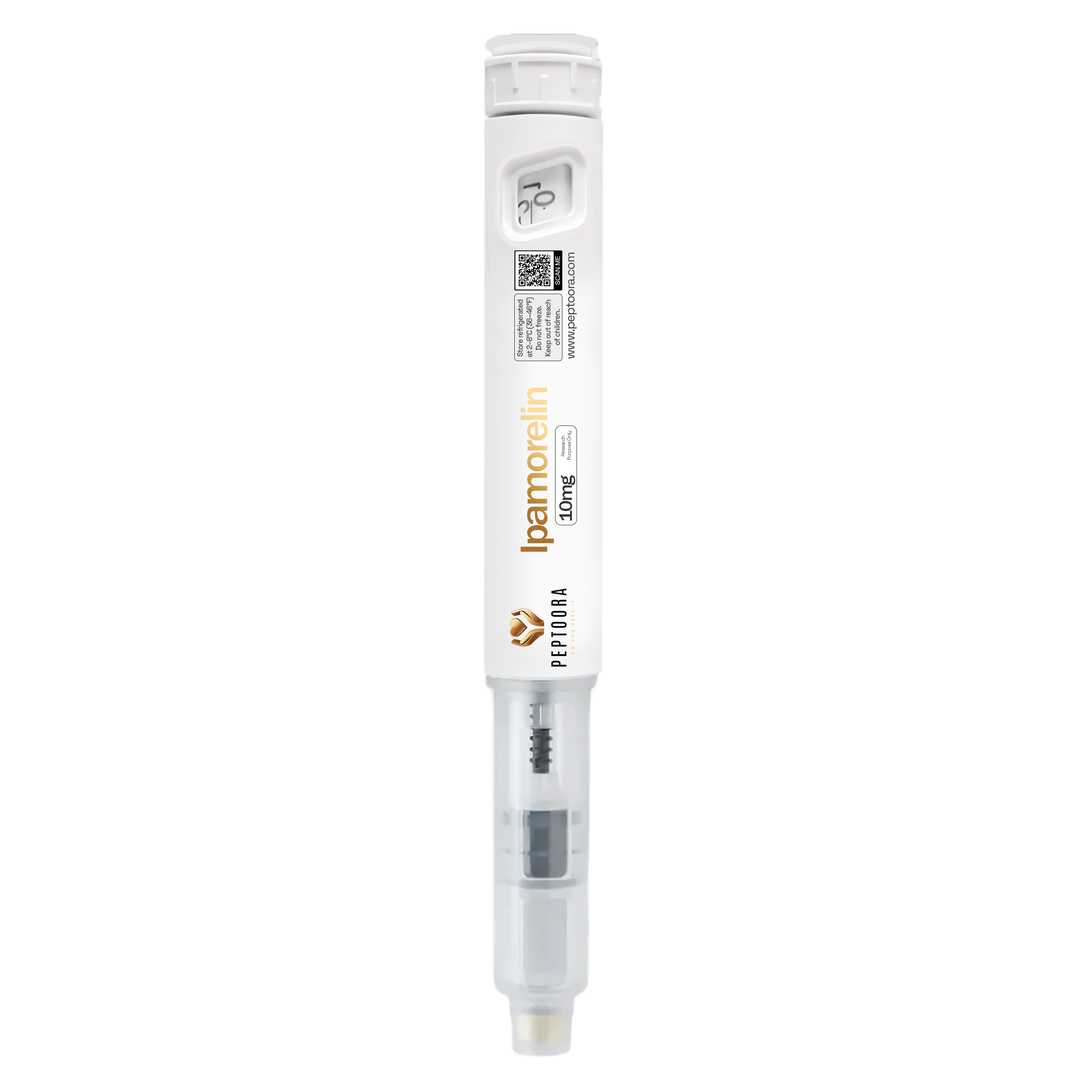
Ipamorelin | 15 mg pen
Ipamorelin is a peptide positioned for controlled research settings where ghrelin receptor (GHS-R1a) signaling is being studied in relation to pulsatile growth hormone dynamics, IGF-1 axis outputs, and recovery-linked endocrine endpoints.
Supports
- Physiologic GH pulse amplitude and timing endpoints (protocol-dependent)
- Downstream IGF-1/IGFBP marker tracking in endocrine study designs
- Sleep-associated GH rhythm investigations (circadian alignment measures)
- Metabolic signaling readouts connected to GH/ghrelin pathways (model-dependent)
- Selective secretagogue profiling vs broader GHRPs (ACTH/cortisol/prolactin panels)
Description
Ipamorelin (development code NNC 26-0161) is a selective growth hormone secretagogue studied as a ghrelin receptor (GHS-R1a) agonist that promotes endogenous, pulsatile growth hormone release. In research literature, it is frequently discussed for a comparatively targeted GH-focused profile relative to earlier growth hormone releasing peptides, with endocrine-panel monitoring used to characterize selectivity.
In controlled models, ipamorelin is used to probe hypothalamic–pituitary signaling that shapes GH pulsatility, and to map downstream endocrine outputs such as IGF-1 axis markers. Study designs commonly quantify GH pulse kinetics, time-to-peak effects, and downstream biomarker shifts, while also tracking off-axis hormone changes to evaluate signaling specificity.
Ipamorelin is positioned strictly for research use, where outcomes should be interpreted within predefined endpoints and controlled experimental protocols.
Clinical Status
Ipamorelin has been studied in preclinical models and exploratory human research contexts evaluating GH secretagogue pharmacology, kinetics, and endocrine selectivity. It is not described as having regulatory approval for therapeutic use in the provided raw text.
Evidence type:
Human RCT ▣ | Observational ▣ | Animal ✔ | In vitro ✔ | Regulatory approval ☐
Mechanism of Action
Ipamorelin is studied as a GHS-R1a agonist that stimulates endogenous GH release through hypothalamic–pituitary pathways. GHS-R1a activation is commonly linked to intracellular signaling that includes phospholipase C/IP3-mediated calcium mobilization and downstream kinase activity, supporting GH exocytosis in somatotroph systems and related neuroendocrine signaling endpoints.
Compared with broader-acting GHRPs, ipamorelin is often evaluated for a more GH-selective endocrine signature, assessed by measuring GH pulse characteristics alongside panels that may include ACTH/cortisol and prolactin, depending on protocol. Downstream effects are typically studied via IGF-1 axis outputs and model-specific recovery or metabolic biomarkers.
Benefits
-
Supports natural growth hormone pulses:
Ipamorelin works by stimulating your body’s own growth hormone release rather than replacing it with synthetic GH. This means the pituitary gland remains active and responsive. Growth hormone is normally released in pulses throughout the day, especially during deep sleep. By encouraging this natural rhythm, Ipamorelin supports a more physiological hormone pattern. This approach helps maintain endocrine balance instead of bypassing regulatory systems. -
Encourages recovery through endogenous pathways:
Growth hormone plays an important role in tissue repair, muscle recovery, and protein synthesis. By stimulating natural GH release, Ipamorelin indirectly supports the body’s recovery signaling network. This includes downstream IGF-1 production, which is involved in structural repair processes. Instead of forcing supraphysiological levels, it works within the body’s own hormone framework. -
Maintains hormonal feedback integrity:
One of the key differences between stimulating GH and injecting it directly is preservation of feedback loops. Ipamorelin activates the pituitary while keeping hypothalamic regulation intact. This means the body can still modulate output based on its needs. Maintaining this feedback system is important in research focused on long-term endocrine stability. -
Selective stimulation with minimal stress-hormone impact:
Earlier growth hormone releasing peptides were associated with increased cortisol or prolactin levels. Ipamorelin was designed to be more selective at the ghrelin receptor. This selectivity allows GH stimulation without significant activation of stress-related hormone pathways. The result is a cleaner hormonal profile in experimental settings. -
Supports sleep-associated hormone cycles:
Growth hormone release naturally peaks during deep sleep stages. Ipamorelin has been studied for its ability to enhance physiologic nighttime GH pulses. Since sleep quality and recovery are closely linked to hormone rhythms, this timing alignment is relevant in recovery-focused research models. -
Engages downstream IGF-1 signaling:
When growth hormone increases, the liver produces insulin-like growth factor 1 (IGF-1). IGF-1 is associated with muscle repair, cellular growth, and metabolic signaling. By stimulating GH first, Ipamorelin activates this secondary pathway in a stepwise, physiological manner. This layered response mimics the body’s natural hormone cascade. -
Explored in age-related hormone decline models:
Natural growth hormone production decreases over time. Ipamorelin has been evaluated in research examining reduced GH levels associated with aging. Rather than introducing external hormones, it encourages the body to resume endogenous production patterns. This makes it relevant in studies of endocrine aging biology. -
Supports structured, controlled hormone research:
Provided in a stabilized pre-mixed injection pen for SubQ administration, Ipamorelin allows consistent exposure in controlled research protocols. Subcutaneous delivery enables predictable absorption. Each unit is freshly prepared and intended strictly for laboratory use only.
Research Data
| Study/model | Reported effect |
| Selective GH secretagogue characterization (preclinical and translational pharmacology) | GH release selectivity described with reduced off-axis endocrine effects compared with earlier GHRPs (model-dependent) |
| Rat pharmacokinetics and route-of-administration studies | PK parameters reported; comparative clearance differences described versus other GHRPs in controlled studies |
| GHS-R1a signaling in somatotroph systems (cell/biochemical models) | Calcium-linked signaling and kinase pathway activation described as mechanistic components supporting GH release |
| Growth hormone secretagogue review literature | Mechanism, history, and clinical-trial progression of GHS classes summarized; ipamorelin discussed within the category |
| Postoperative ileus model (rodent) | Ghrelin-mimetic effects on gastrointestinal motility endpoints investigated with ipamorelin in a controlled model |
| Bone-related endpoints under glucocorticoid exposure (rat model) | Bone formation and turnover-related outcomes explored with ipamorelin in a preclinical context |
| Comparative GHRP/GHS mechanistic work | GHRP class activity examined as ghrelin receptor agonism, supporting comparative endocrine profiling designs |
| Systems-level ghrelin/GHS integration reviews | Ghrelin system integration and endocrine coordination described, providing context for GHS-R1a agonist study designs |
Stack Suggestions
In extended experimental designs, Ipamorelin is sometimes paired with:
- CJC-1295 (No-DAC) → dual-pathway GH pulse studies (GHRH receptor + GHS-R1a)
- GHRP-2 → comparative secretagogue profiling (pulse amplitude/selectivity endpoints)
- NAD+ → energy-state and recovery biomarker tracking alongside endocrine endpoints
Stacks discussed are for experimental design only, not safety/efficacy guidance.
Possible Side Effects
If ipamorelin is used in experimental systems, observed effects may include transient injection-site reactions (redness, irritation), short-lived headache or flushing, and fluid-balance changes that can occur when GH signaling is experimentally increased. Because ghrelin receptor agonism can interface with broader neuroendocrine networks, protocols commonly include endocrine-panel monitoring (e.g., cortisol/prolactin where relevant), sleep-related observations, and glucose-related biomarkers in susceptible models. Effects are model- and exposure-dependent and should be interpreted only within controlled study frameworks.
Scientific References
- Ipamorelin, the first selective growth hormone secretagogue — Animal/In vitro
- Pharmacokinetic evaluation of ipamorelin and other peptidyl growth hormone secretagogues with emphasis on nasal absorption — Animal
- Regulation of ERK1/2 activity by ghrelin-activated growth hormone secretagogue receptor 1a — In vitro
- Growth hormone secretagogues: history, mechanism of action, and clinical development — Review
- Integrating growth hormone secretagogues into the ghrelin system — Review
- Efficacy of ipamorelin, a novel ghrelin mimetic, in a rodent model of postoperative ileus — Animal
- Do growth hormone-releasing peptides act as ghrelin receptor agonists? — Review
- Ipamorelin: Uses, Interactions, Mechanism of Action — Reference database
- Ipamorelin acetate: compiled pharmacology/toxicology dossier excerpt (regulatory submission document) — Regulatory
- The growth hormone secretagogue ipamorelin counteracts glucocorticoid-induced decrease in bone formation of adult rats — Animal
Cautions
- For educational and scientific context only; not intended to diagnose, treat, cure, or prevent any disease.
- If you are pregnant, nursing, have a medical condition, or use prescription medication, consult a qualified professional.
- Discontinue use if sensitivity occurs.
Pairs well with
In stock!
Complimentary shipping & returns
Ipamorelin | 15 mg pen
FAQs
Read our FAQs page to find more
Do I need a prescription to order?
No prescription is required to order. However, we recommend consulting a healthcare professional before starting any injectable therapy.
How should I store my products?
Store unopened products in a cool, dry place. Refrigerate as instructed after opening.
Are the peptide pens pre-mixed?
Yes. Our peptide pens are pre-mixed and ready to use. They are formulated for convenience and consistent dosing without the need for reconstitution.
Are these products suitable for everyone?
These products are intended for responsible adult use. Individual suitability varies depending on medical history, medications, and overall health status. Consulting a qualified medical professional before use is essential.
Are these products intended for medical treatment?
These products are not intended to diagnose, treat, cure, or prevent any disease. They are offered within the scope of applicable regulations and should be used responsibly.
If you have any questions, you are always welcome to contact us. We'll get back to you as soon as possible, within 24 hours on weekdays.
-
Shipping Information
Use this text to answer questions in as much detail as possible for your customers.
-
Customer Support
Use this text to answer questions in as much detail as possible for your customers.
-
FAQ’s
Use this text to answer questions in as much detail as possible for your customers.
-
Contact Us
Use this text to answer questions in as much detail as possible for your customers.