

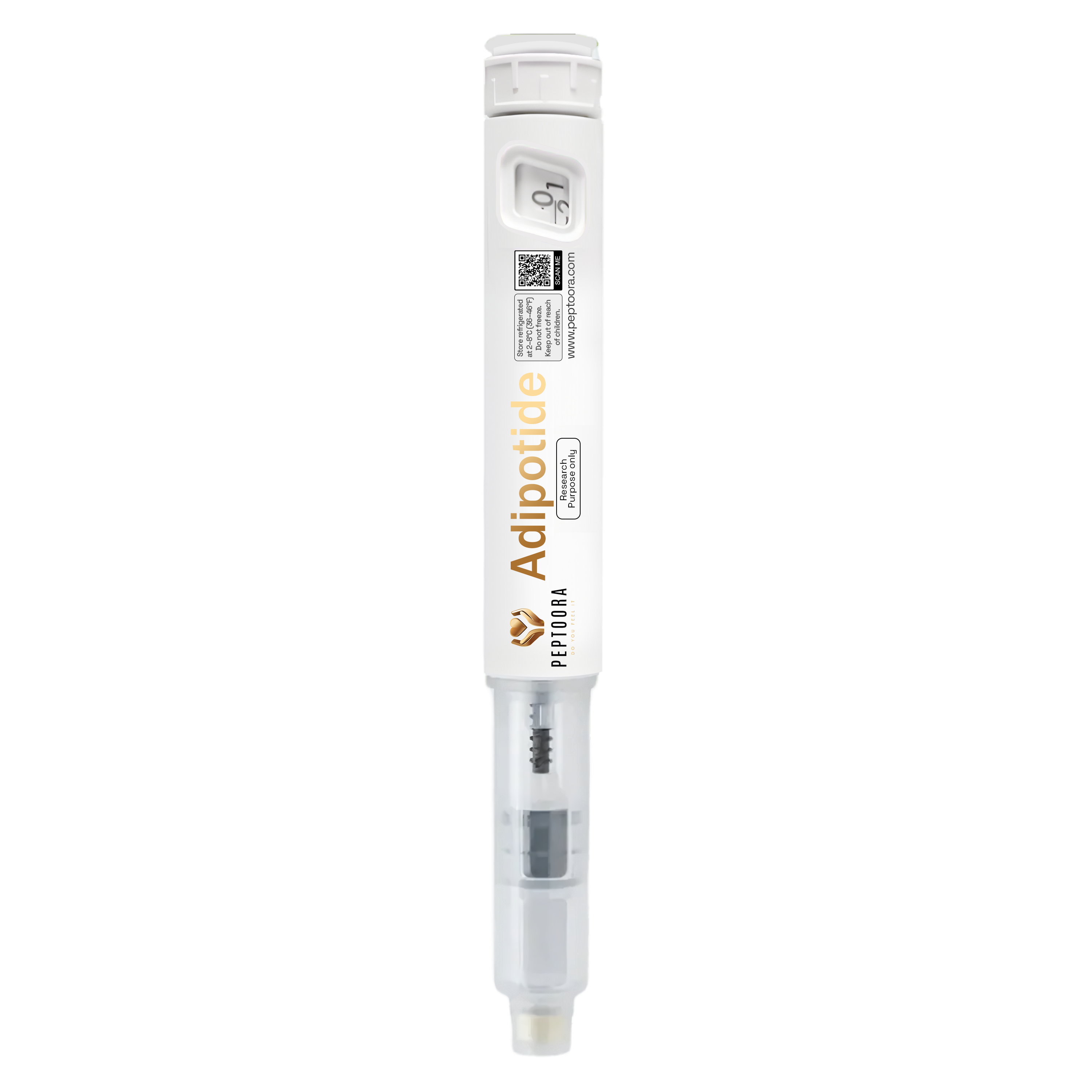
Adipotide | 30 mg pen
Adipotide (FTPP) is a synthetic peptidomimetic studied for its role in adipose-tissue modulation through vascular-targeting mechanisms. In preclinical research, it has been evaluated in models where fat-mass reduction, adipose vascular regression, and metabolic marker changes are measured as endpoints. Information on this page is provided for scientific and educational context only and does not represent medical guidance or therapeutic claims.
Supports
Adipose tissue targeting assessed via vascular receptor-mediated binding mechanisms.
Fat-mass reduction endpoints tracked through adipose-specific vascular disruption models.
Body-composition changes evaluated in controlled obesity and metabolic research frameworks.
Metabolic marker shifts measured through insulin-sensitivity and lipid-profile endpoints.
Adipocyte viability and apoptosis signaling assessed in tissue-specific experimental models.
DESCRIPTION
Adipotide is a synthetic peptide originally developed as a vascular-targeting compound for white adipose tissue. In experimental biology, it is studied for its ability to selectively bind to receptors expressed on blood vessels supplying fat tissue, leading to downstream vascular disruption and secondary adipocyte loss in controlled models.
Mechanistic literature commonly describes Adipotide as a chimeric construct combining a targeting sequence associated with adipose vasculature and a pro-apoptotic domain. This design enables selective localization to fat-associated endothelial cells, where mitochondrial disruption and apoptosis signaling have been observed in laboratory settings. Unlike endocrine-based metabolic compounds, Adipotide is studied as a structural and vascular modulator of adipose tissue.
Adipotide is presented here for controlled research and educational context only. It is not marketed as a therapeutic intervention, and observed outcomes vary by model, protocol, and experimental design.
CLINICAL STATUS
Adipotide has published preclinical research across multiple models, including rodent and non-human primate obesity studies. Observations have included reductions in body weight and fat mass under controlled conditions, alongside monitored safety endpoints. It is not approved for general human therapeutic use and remains an experimental research compound.
Evidence type:
Human RCT ✘ | Observational ✘ | Animal ✔ | Non-human primate ✔ | In vitro ✔ | Regulatory approval ✘
MECHANISM OF ACTION
Mechanistic models of Adipotide emphasize targeted binding to receptors associated with white adipose tissue vasculature. Following binding and internalization, the peptide’s pro-apoptotic domain has been shown to disrupt mitochondrial integrity in endothelial cells, leading to apoptosis of the vascular structures supplying fat tissue.
In applied research contexts, this vascular disruption results in reduced nutrient and oxygen delivery to adipocytes, contributing to adipocyte stress and subsequent fat-mass reduction. These effects are typically measured through imaging, body-weight changes, and metabolic marker panels. Unlike GLP-1 or appetite-regulating compounds, Adipotide does not primarily act through central nervous system pathways.
BENEFITS
Targeted Adipose Tissue Modulation:
Adipotide has been studied for its ability to selectively target fat-associated vasculature. In experimental models, this targeted approach has resulted in localized reductions in adipose tissue without broad systemic stimulation.
Fat Mass Reduction In Preclinical Models:
Animal studies, including primate research, have reported measurable decreases in fat mass and body weight under defined dosing protocols. These outcomes are linked to vascular disruption and adipocyte loss.
Non-Endocrine Mechanism:
Adipotide operates independently of hormonal pathways such as GLP-1 or leptin signaling. This allows it to be studied in models where appetite-independent fat modulation is investigated.
Metabolic Marker Improvements:
Research has documented changes in lipid profiles and insulin-related markers following treatment in controlled models. These effects are considered downstream of adipose tissue reduction.
Vascular Targeting Strategy:
The peptide’s design supports receptor-mediated targeting of adipose tissue blood vessels. This selective mechanism is central to its experimental profile.
Body Composition Research Applications:
Adipotide is frequently used in research frameworks focused on body composition, fat distribution, and metabolic health under controlled conditions.
RESEARCH DATA
Study/model | Reported effect
Obese primate model (preclinical) | Reduction in fat mass and body weight with monitored metabolic changes.
Rodent obesity model | Demonstrated adipose tissue loss via vascular-targeting mechanisms.
Endothelial-cell mechanistic studies | Observed mitochondrial disruption and apoptosis signaling in targeted cells.
Metabolic profiling studies | Reported changes in lipid and insulin-related markers following treatment.
STACK SUGGESTIONS
In experimental metabolic-design contexts, Adipotide is sometimes paired with:
GLP-1 analogues (appetite-regulation comparison frameworks)
NAD+ (bioenergetic and metabolic marker studies)
L-Carnitine (lipid metabolism and oxidation research models)
Stacks discussed are for experimental design only, not safety or efficacy guidance.
POSSIBLE SIDE EFFECTS
In preclinical and observational research settings, the following have been reported:
Fatigue or reduced energy in active tissue-modulation phases.
Injection-site reactions including redness or discomfort.
Transient metabolic adjustments depending on protocol design.
Potential systemic stress responses under higher exposure models.
This section is provided for general context only and does not constitute medical guidance.
SCIENTIFIC REFERENCES
Adipotide studies in obese primate models — Preclinical research
Mechanistic studies on adipose vascular targeting peptides
Mitochondrial disruption in endothelial cells — Experimental data
Obesity model interventions using targeted peptides — Translational research
CAUTIONS
For educational and scientific context only; not intended to diagnose, treat, cure, or prevent any disease.
Not approved for general medical use.
Outcomes vary based on experimental design and model conditions.
Consult a qualified professional for any health-related decisions.
Pairs well with
In stock!
Complimentary shipping & returns
Adipotide | 30 mg pen
FAQs
Read our FAQs page to find more
Do I need a prescription to order?
No prescription is required to order. However, we recommend consulting a healthcare professional before starting any injectable therapy.
How should I store my products?
Store unopened products in a cool, dry place. Refrigerate as instructed after opening.
Are the peptide pens pre-mixed?
Yes. Our peptide pens are pre-mixed and ready to use. They are formulated for convenience and consistent dosing without the need for reconstitution.
Are these products suitable for everyone?
These products are intended for responsible adult use. Individual suitability varies depending on medical history, medications, and overall health status. Consulting a qualified medical professional before use is essential.
Are these products intended for medical treatment?
These products are not intended to diagnose, treat, cure, or prevent any disease. They are offered within the scope of applicable regulations and should be used responsibly.
If you have any questions, you are always welcome to contact us. We'll get back to you as soon as possible, within 24 hours on weekdays.
-
Shipping Information
Use this text to answer questions in as much detail as possible for your customers.
-
Customer Support
Use this text to answer questions in as much detail as possible for your customers.
-
FAQ’s
Use this text to answer questions in as much detail as possible for your customers.
-
Contact Us
Use this text to answer questions in as much detail as possible for your customers.